
Soft Washing Spokane
The Right Way to Clean Your Home's Exterior
Soft washing in Spokane is the cleaning method most homeowners do not know they need until they see what high pressure does to the wrong surface. When it comes to your home’s exterior a lot of people ask the same questions. What is the best way to clean my siding? How do I get rid of the algae on my house? Will pressure washing damage my paint or siding?
Having over a decade of experience really helps us answer those questions with confidence and use a thought out approach to safely clean your home without causing unnecessary damage or unsightly issues. This is where soft washing in Spokane shines as the clear winner every single time.
TLDR | What You Need to Know
Soft washing uses low pressure water under 500 PSI combined with professional cleaning chemistry to safely remove algae, mildew, moss, and organic growth from siding, roofs, and painted surfaces. It is the only method recommended by the Asphalt Roofing Manufacturers Association for asphalt shingle roofs. High pressure washing on the wrong surfaces causes permanent damage including the Zorro style marks you see on vinyl siding that was hit too hard. We continue soft washing Spokane because it’s the right way. We even mix the right chemistry on site for every job rather than using the same solution on everything. Call or text for a free quote.
What Is Soft Washing and Why Does It Matter
A lot of companies in Spokane claim to soft wash. Even more have no idea what soft washing actually means. Both situations create problems for homeowners who also have not been informed about what they are agreeing to.
Pulling straight from the definition, soft washing is a cleaning method using low pressure water where solutions, typically sodium hypochlorite based cleaning chemicals, are used to remove mildew, bacteria, algae, and other organic stains from roofs and other building exteriors.
In practice that means we aim to apply water or cleaning chemistry at under 500 PSI and rely on specialty chemicals to treat organic growth rather than brute force pressure. The chemicals do the work. The water delivers them and rinses them away.
For reference your typical garden hose runs at 60 to 80 PSI. A consumer pressure washer is rated for up to 4,000 PSI. The difference between those two numbers and what they do to your siding, paint, and roofing is enormous. Soft washing lives at the low end of that range on purpose.

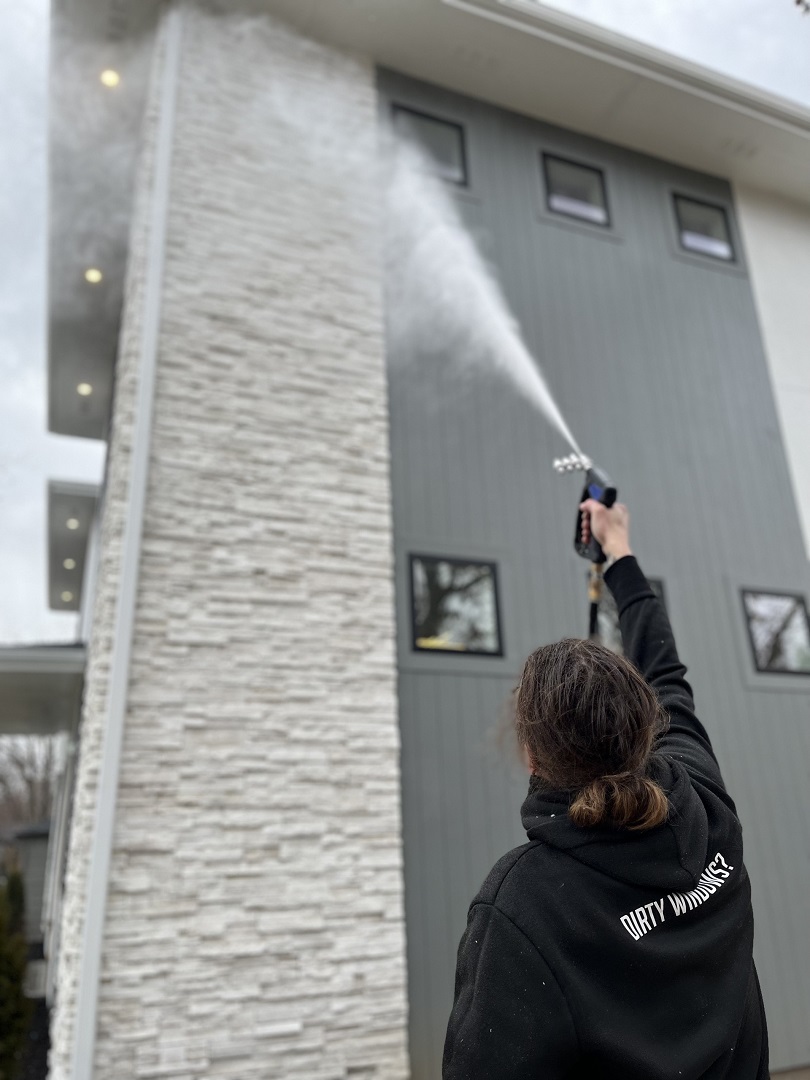
How We Achieve Low Pressure Soft Washing
There are several ways we control and deliver low pressure depending on the surface and the situation.
We switch out tips at the wand end to reduce pressure output for surfaces that need a gentler approach. Using dedicated low pressure pumps for applications where standard equipment would deliver too much force even at reduced settings is another way. Finally, we can use pump up sprayers on areas where we need to control overspray or require pinpoint accuracy, like around windows, trim, and landscaping.
When it comes to chemical mixing we have the ability to mix on the fly and dial in exactly the correct concentration for the specific surface and the specific type of organic growth we are dealing with. This is a significant advantage over companies that have a one size fits all approach to soft washing and apply the same concentration to every surface on every job regardless of what is actually there.
The right chemical at the right concentration applied at the right pressure for the right amount of dwell time. That is soft washing done correctly. Everything else is just spraying and hoping.
What Happens When Soft Washing Goes Wrong
We wish we could say we have never been called in after someone hired the cheap pressure washing company and needed help fixing what was left behind.
The most common damage we see is on vinyl siding that has begun to develop oxidation. The previous company hit it with high pressure and once the siding dried it had Zorro style marks running in every direction because they blasted through the oxidation layer unevenly. Those marks are difficult to fix and in some cases impossible to fully remove without repainting or replacing the affected sections.
We have also seen pressure washing companies mixing their own DIY cleaning solutions and accidentally changing the paint color on the siding or stripping pigment from the surface entirely. There have been instances where painted wood surfaces have raised grain and splintered from too much pressure. Sadly, we have seen composite decking with permanent streaking from a pressure washer tip or surface cleaner that was too aggressive and completely the wrong approach.
There are a lot of things that can go wrong when soft washing is done by an inexperienced company or attempted as a DIY project without the right chemicals and equipment knowledge. The results are not always fixable. We have written a lot more about issues that can happen in our blog.


Soft Washing vs Pressure Washing
This is the question we get asked more than any other and the honest answer is that both have their place. The problem is that most companies use pressure washing when soft washing is the right call because pressure washing is faster and requires less chemistry knowledge.
Soft washing is the correct method for:
Roofs. This is not a preference or an opinion. The Asphalt Roofing Manufacturers Association specifically recommends soft washing as the only approved method for cleaning asphalt shingle roofs. High pressure removes granules, lifts shingle edges, and voids manufacturer warranties. There is no debate on this one. You can read more about our roof cleaning process in depth on our roof cleaning page.
Siding. Vinyl, wood, stucco, Hardie plank, and painted surfaces all respond better to soft washing than pressure washing. The cleaning solution we use removes organic growth at the root. The low pressure rinse does not stress the material. Our house washing page breaks all this down in depth.
Painted surfaces. High pressure and paint are not friends. Soft washing cleans painted wood, painted brick, and painted concrete without lifting or stripping the finish.
Pressure washing is the correct method for:
Concrete driveways and hardscaping where the surface is durable enough to handle higher pressure and the contamination requires mechanical force to remove.
Unpainted masonry and brick where the material is robust and the buildup is heavy.
Commercial surfaces with significant contamination that chemistry alone cannot fully address.
We assess every job before we start and use the right method for what is actually in front of us. Not whatever is faster or cheaper to deliver.
Soft Washing Chemistry: What We Use and Why
The chemistry is where soft washing results are actually made. The pressure is just the delivery mechanism.
Standard soft washing solutions are sodium hypochlorite based. The same active ingredient as bleach but applied at the right concentration for the specific surface. Too weak and it does not kill the organic growth at the root. Too strong and it damages the surface, bleaches paint, or harms landscaping.
We mix on the fly based on what we see on the job. A roof with heavy established moss requires a different concentration than vinyl siding with light algae growth. A wood fence requires a different chemistry entirely than a concrete driveway. Getting this right is the skill that separates experienced soft washing companies from companies that spray the same mixture on everything and call it done.
For homeowners who want an eco-friendly alternative to sodium hypochlorite we offer Not Bleach, yes it’s really called that, our oxygen based cleaning product that kills algae and organic growth without chlorine. Safe for plants, pets, and everything below the roofline. No bleach smell. Soon available on our site.


Soft Washing Services We Offer in Spokane
Roof Soft Washing
The only approved method for asphalt shingle roofs. We kill moss and algae at the root and let rain handle the rinse over the following weeks. No pressure on the shingles. Results last two to three years on most Spokane roofs.
House Soft Washing
Low pressure application of professional cleaning chemistry removes algae, mildew, and organic growth from all siding types without Zorro marks, without stripping oxidation unevenly, and without damaging paint or trim.
Deck and Fence Soft Washing
Wood surfaces require chemistry not pressure. We soft wash wood decks and fences to lift organic growth and gray weathering without raising the grain or splitting boards.
Why The Bright Side for Soft Washing in Spokane
The Bright Side has been doing this long enough to know what goes wrong when soft washing is done incorrectly and we have cleaned up enough of those mistakes to take the correct approach seriously on every single job.
There is no one size fits all approach. We assess the surface, mix the right chemistry for what is there, apply it at the right pressure with the right dwell time, and rinse thoroughly. Every time.
Our 110 percent satisfaction guarantee covers every soft washing job we do in Spokane. If you are not completely satisfied we come back and make it right. If we still cannot get the result we promised we refund your money and pay you ten percent on top of that for your time.
See what Spokane homeowners say about our soft washing. Read our reviews
Frequently Asked Questions
What is the difference between soft washing and pressure washing?
Soft washing uses low pressure water under 500 PSI combined with specialty cleaning chemistry to remove organic growth like algae, mildew, and moss. Pressure washing uses high pressure water up to 4,000 PSI to remove contamination mechanically. Soft washing is the correct method for roofs, siding, and painted surfaces. Pressure washing is the correct method for durable surfaces like concrete and unpainted masonry.
Is soft washing safe for my siding?
Yes. Soft washing is safer for siding than pressure washing because the low pressure does not stress the material or blast through oxidation layers. The chemistry does the cleaning work rather than mechanical force.
Is soft washing safe for my roof?
Yes. It is the only method recommended by the Asphalt Roofing Manufacturers Association for asphalt shingle roofs. High pressure washing on a roof removes granules, lifts shingle edges, and voids manufacturer warranties.
Do you use bleach for soft washing?
We use sodium hypochlorite based algicides for most soft washing applications mixed at the correct concentration for the specific surface. We also offer Not Bleach, an eco-friendly oxygen based alternative for homeowners who prefer to avoid chlorine chemistry around their landscaping, pets, or family.
Can soft washing remove moss from my roof?
Yes. Professional soft wash chemistry kills moss and algae at the root. The dead growth releases over the following weeks and rain handles the rinse. Results last two to three years on most Spokane roofs.
How much does soft washing cost in Spokane?
House washing starts at $475 for most Spokane homes. Roof soft washing starts at $799. Pricing depends on the size of the property and the type and severity of organic growth. Call or text for a free quote specific to your home.
Do you serve areas outside Spokane?
Yes. We serve Spokane and surrounding communities near you and throughout Eastern Washington and North Idaho. See our full service area.
Ready to get your home cleaned the right way?
Call, text or click below for a free soft washing quote in Spokane.